
European Water Chestnut Natural History
Learn more about this invasive species and what you can do to prevent its spread in our local waterways.
European Water Chestnut (Trapa natans)
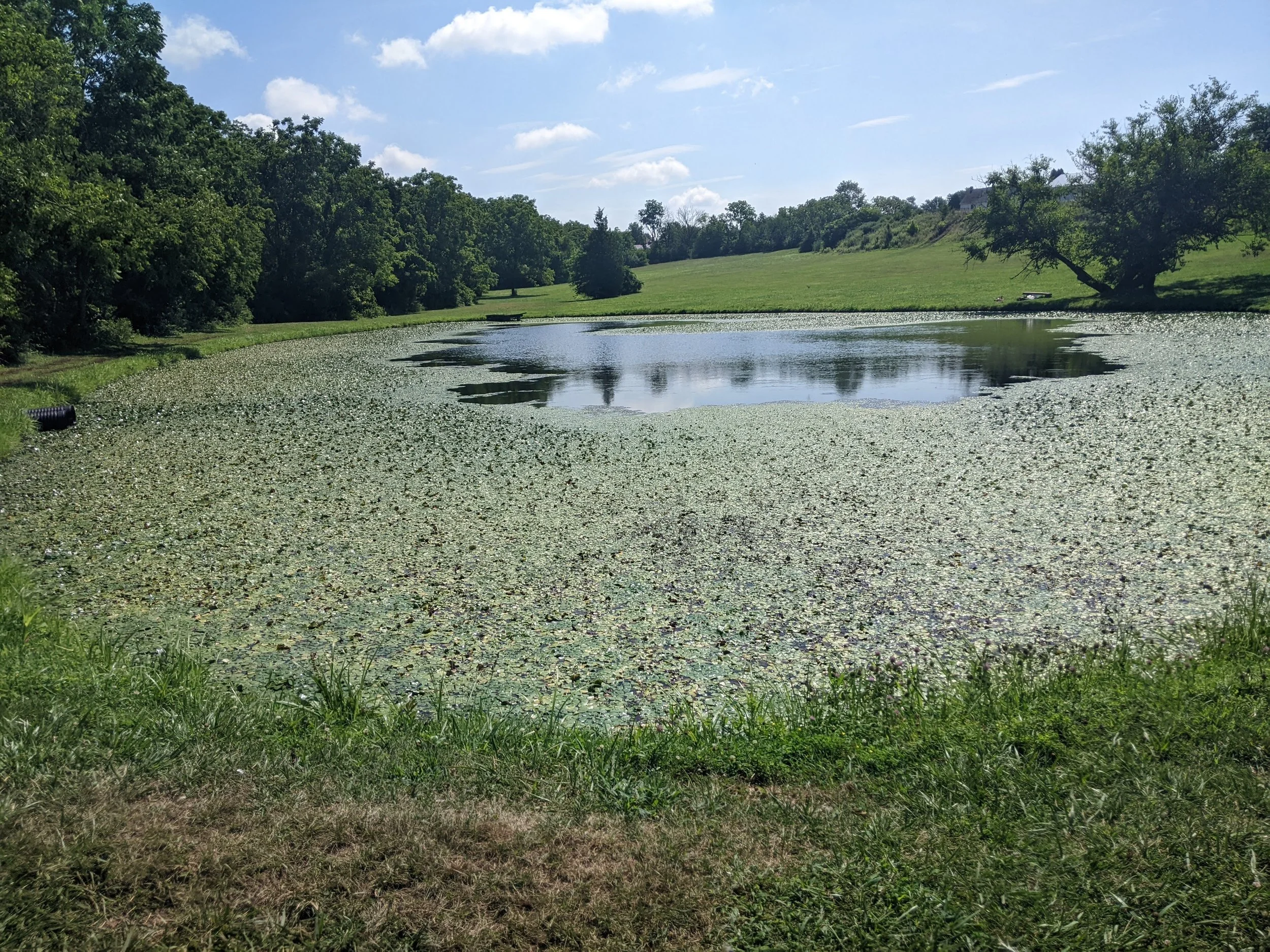
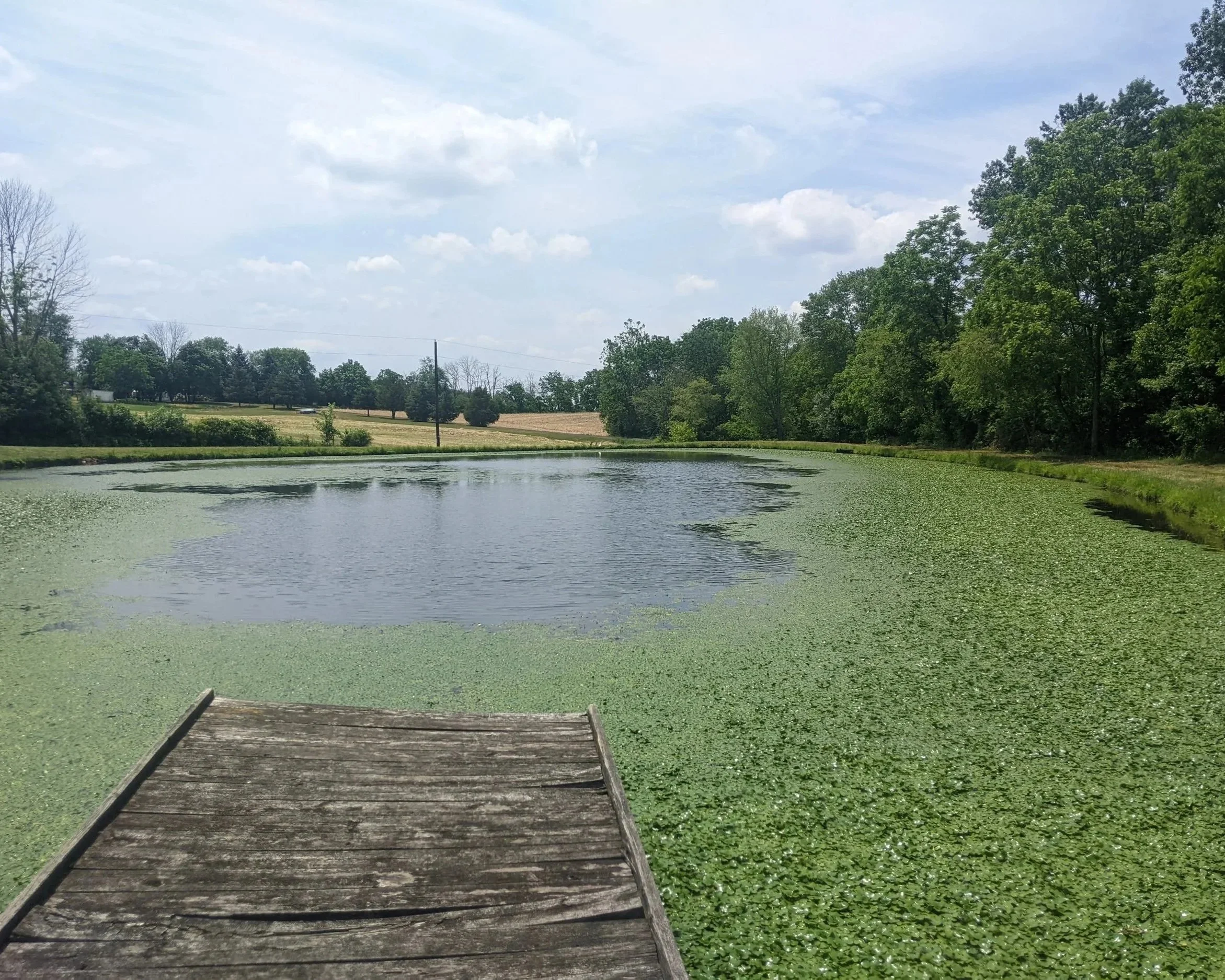
European water chestnut is an aggressive, non-native aquatic plant that threatens the health of lakes, ponds and slow moving waterways throughout the Perkiomen Creek watershed and the surrounding region. Once established, it forms dense mats of floating vegetation that crowds out native plants, reduce wildlife habitat and recreational use of waterways.
Species Information
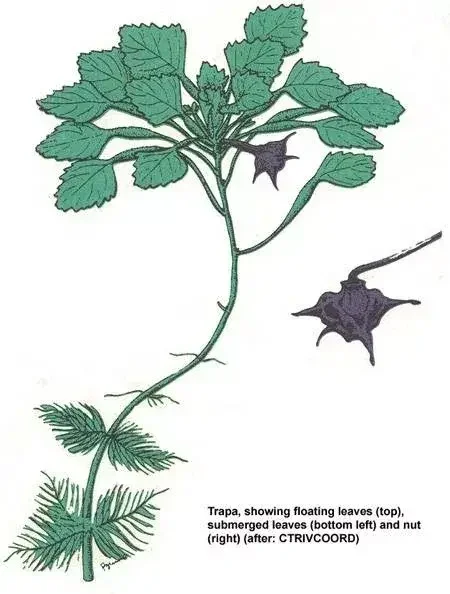
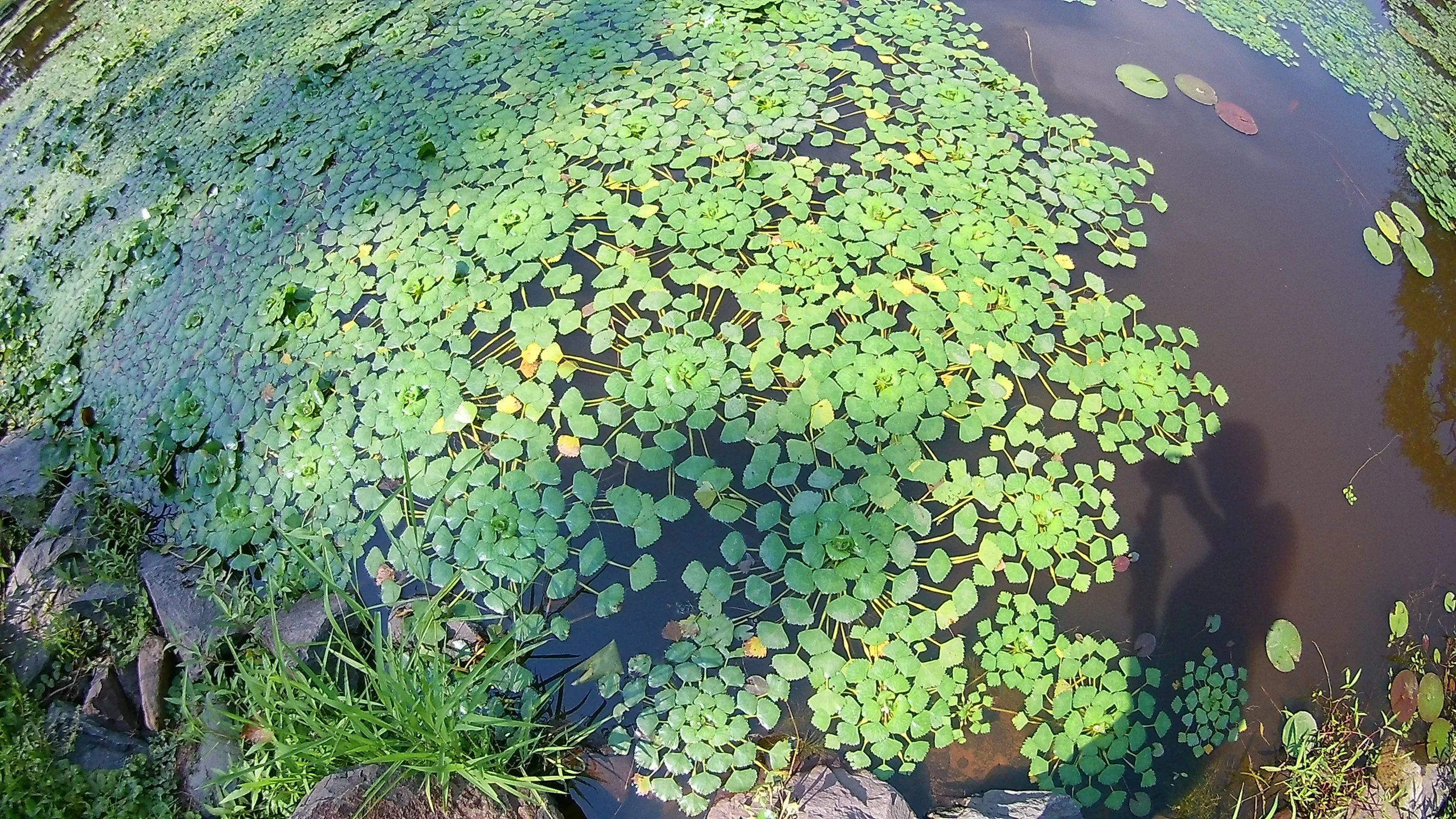
European water chestnut is a rooted, annual plant with long, buoyant stems anchored in the sediment of a waterbody. It produces feathery, submersed leaves along the stem and glossy, triangular floating leaves that form dense rosettes at the water’s surface. Small white flowers emerge from the center of the rosettes in early to mid-summer.
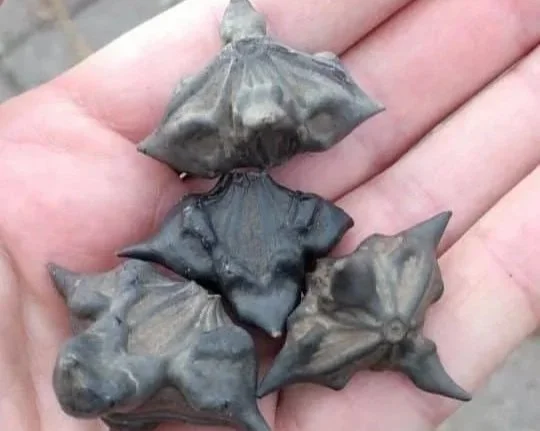
By mid-summer, the plant begins producing hard, nut-like seeds that develop under the rosette and along the stem. Each seed has four sharp spines and can remain viable in sediment for up to 12 years. These seeds allow infestations to persist long after plants are removed and can pose a safety hazard to people, pets and wildlife.
How Water Chestnut Spreads
Most seeds fall close to the parent plant, expanding existing colonies. However, seeds and seed-baring plant fragments can be carried downstream, causing new infestations to become established. Waterfowl may also contribute to dispersal, as the spiny seeds can become tangling in feathers. Human activity, including boating and fishing, can unintentionally spread seeds between water bodies.
Impacts to the Watershed
Dense water chestnut infestations reduce the ecological function of waterways and contribute to the long-term degradation of aquatic habitat within the watershed.
When left unmanaged, water chestnut can:
Outcompete and shade out native aquatic vegetation.
Reduce dissolved oxygen levels, harming fish and other aquatic species.
Alter stream flow and increase the likelihood of flooding.
Limit boating, paddling, fishing and other recreational uses.
Create hazards along shorelines and shallow water due to sharp seeds.
Management & Control
The Perkiomen Watershed Conservancy uses a long-term, adaptive approach to water chestnut management that focuses on prevention, early detection and consistent, multi-year removal.
Early- Season Removal:
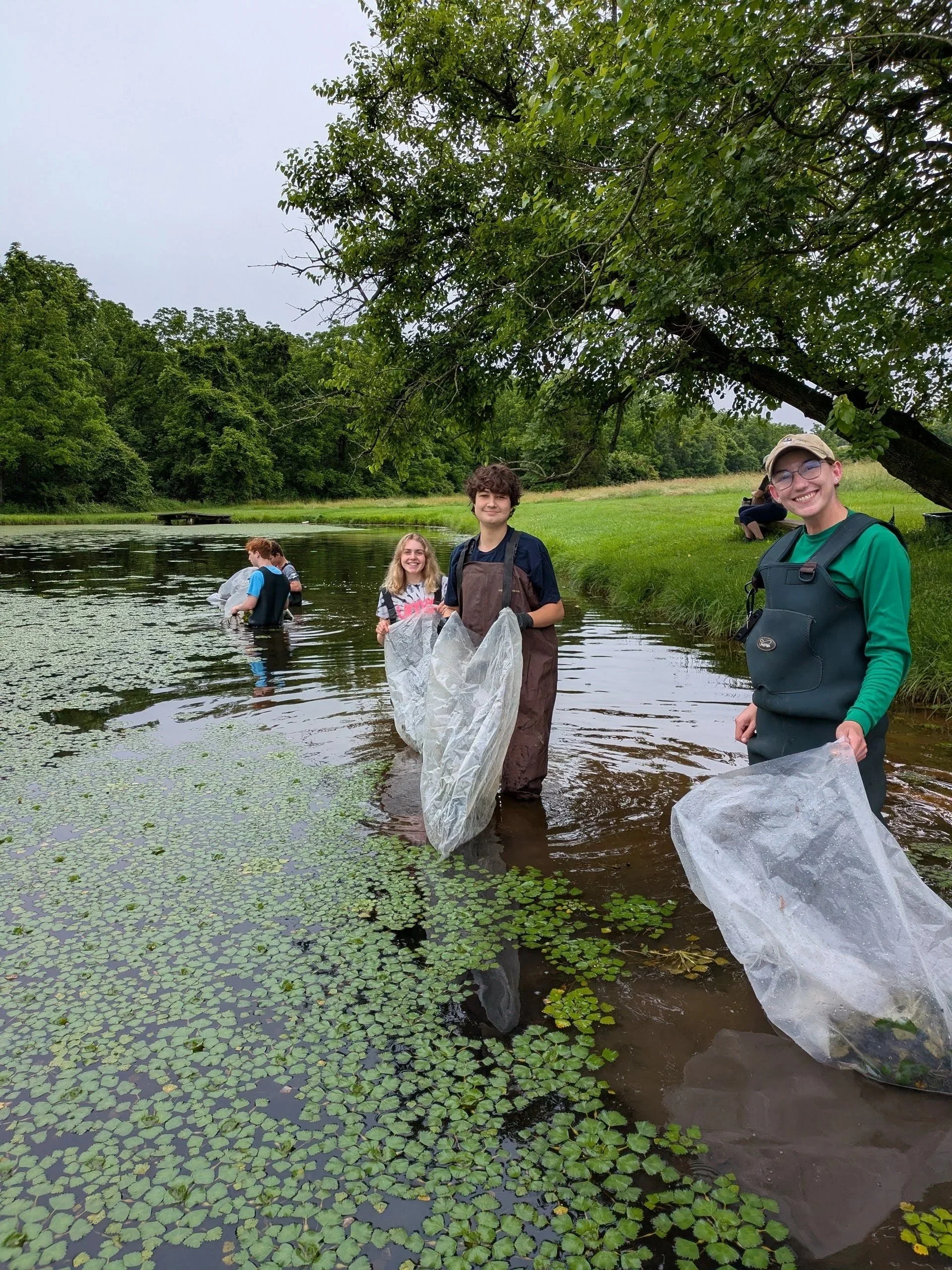
Hand-pulling is most effective management begins early in the growing season, before seeds mature and begin to fall off (typically by late July). Removing plants prior to seed production is critical to slowing spread.
Repeated Annual Efforts:
Because water chestnut seeds remain viable in sediments for many years, successful control requires repeated removal over multiple seasons. Consistent management helps reduce the seed bank and prevent re-establishment.
Monitoring and Assessment:
PWC staff regularly survey waterways to track know infestations and identify new sites. Monitoring informs management priorities and allows for new infestations to be quickly identified.
Prevention:
Preventing the spread of water chestnut is one of the most effective tools available. Cleaning boats, gear and footwear before moving between waterbodies helps protect local streams and ponds.
What You Can Do to Prevent the Spread of Water Chestnut
Learn to identify water chestnut and report suspected sightings to the Perkiomen Watershed Conservancy.
Volunteer for removal events to help prevent seed production and protect local waterways.
Avoid disturbing infestations during late summer, when seed are present and likely to spread.
Share what you know with neighbors, paddlers, and anglers to help stop the spread.