How the Perkiomen Watershed Conservancy Began
The Perkiomen Watershed Conservancy works to protect and restore the land and water resources of the Perkiomen Creek watershed. This watershed is a naturally connected system of streams, groundwater and landscapes that crosses municipal boundaries and links our communities together.
By the early 1960s, growing development and changing land use placed increasing pressure on the watershed. A severe drought from 1962 to 1966 exposed declining water quality, lowered groundwater levels and steams that could no longer support the demands placed upon them. These conditions made clear the need for a coordinated, watershed-wide approach to water protection.
In response, the Conservancy, originally founded in 1964 as the Perkiomen Valley Watershed Association, was established to address water quality concerns and promote responsible stewardship of the watershed. Early efforts focused on public education, water monitoring and advocating for stronger water quality standards.
For more than 50 years, the Perkiomen Watershed Conservancy has worked with residents, municipalities, schools and partners to improve watershed health. Our work includes removing trash from local steams, restoring riparian buffers, preserving important natural areas, educating thousands of students and adults and implementing on-the-ground projects that reduce erosion and improve water quality.
Today, we continue this mission by protecting clean water, restoring degraded landscapes and engaging our community in caring for the Perkiomen Creek watershed - because a healthy watershed supports resilient communities, wildlife and future generations.

Our Beginning
Foundations of the Conservancy: 1964 - 1999
From our founding in 1964 through the end of the 20th century, the Perkiomen Watershed Conservancy grew from a small, volunteer-driven effort into a recognized advocate for protecting local streams, open space and water quality. These early decades reflect our response to changing land-use, emerging environmental challenges and a growing understanding of the importance of watershed-based conservation.
1964:
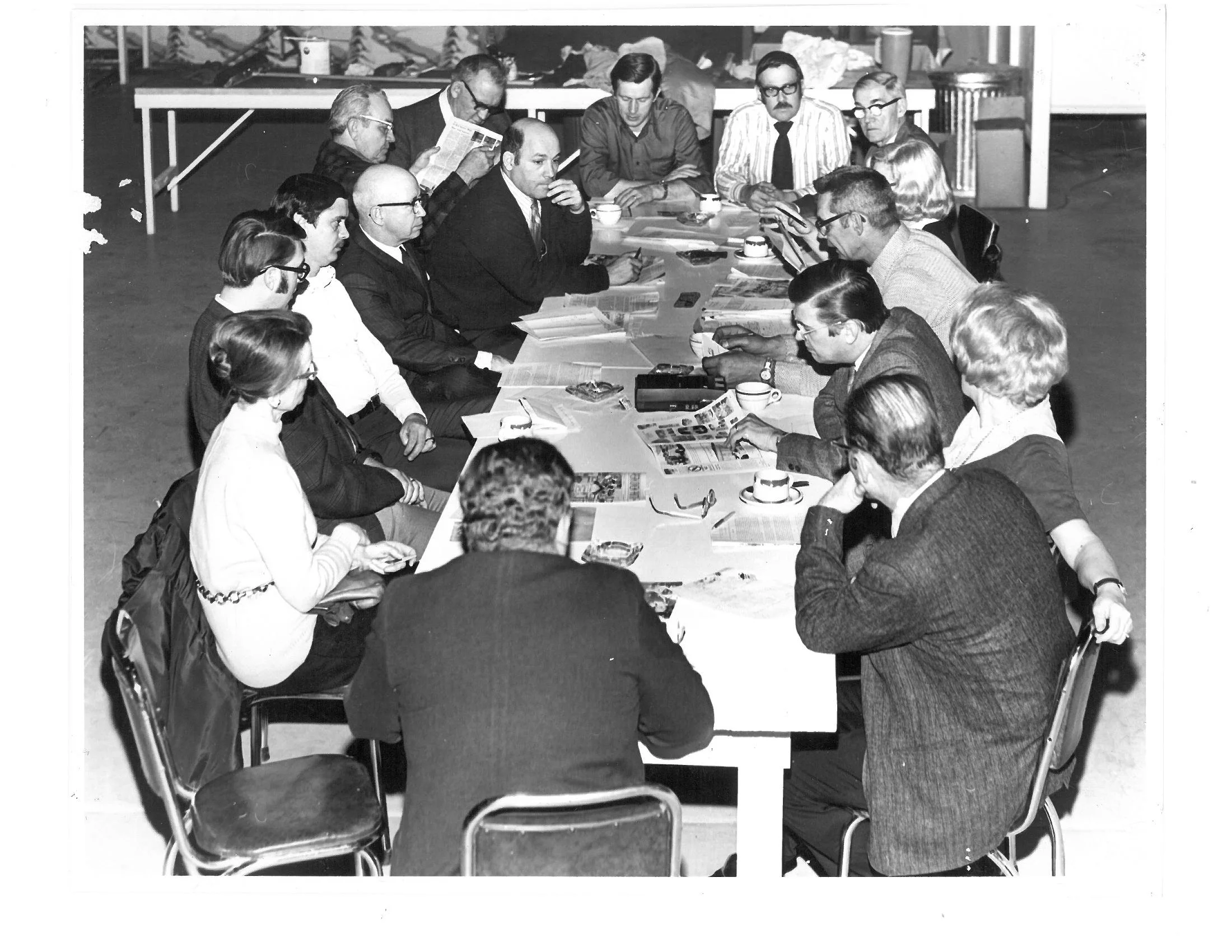
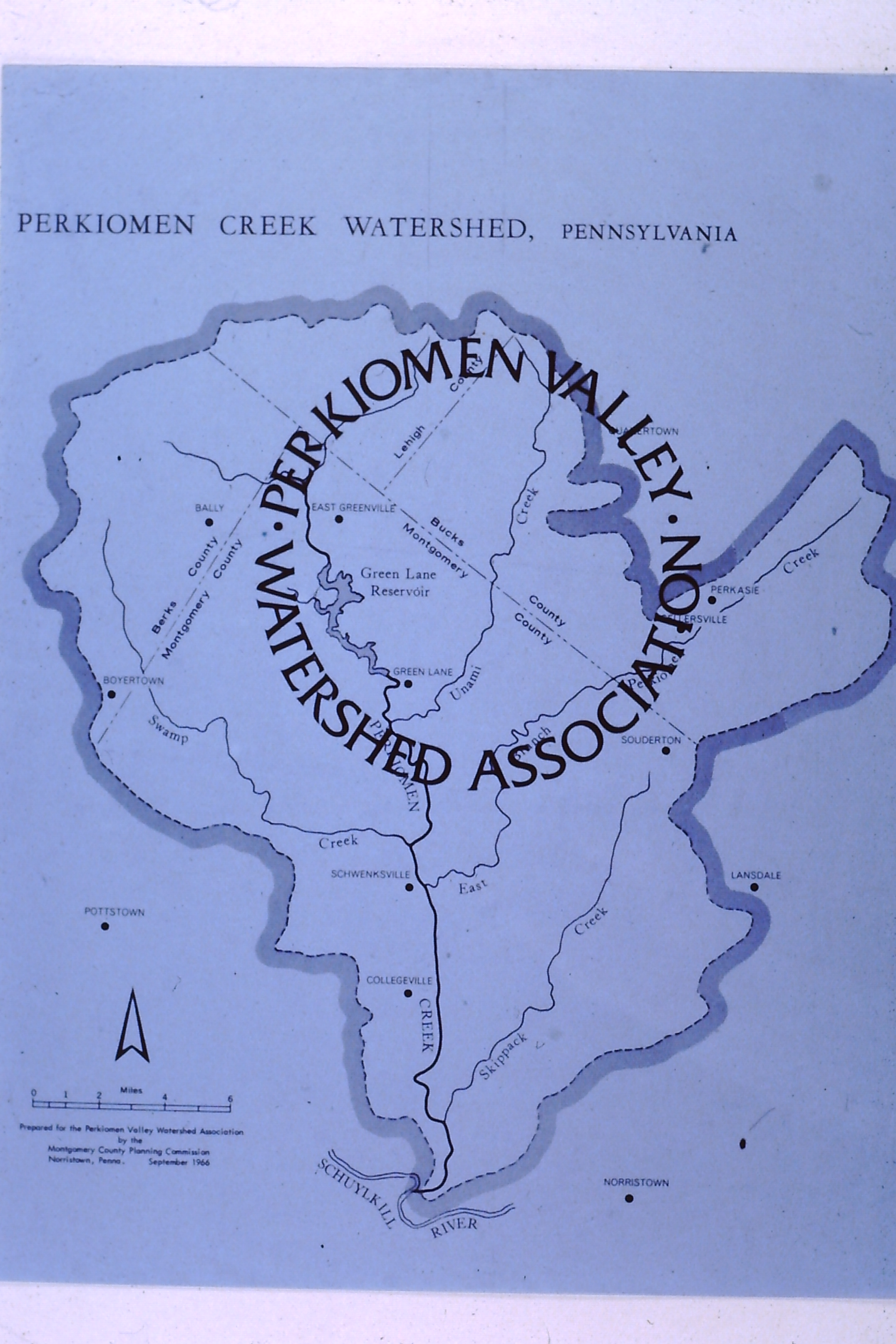
November 23 - Perkiomen Valley Watershed Association (PVWA) came into being as a group of concerned citizens who desired to protect the watershed environment. The incorporating signers functioned as a Board of Directors until the membership could vote a full board to strength. Monthly meetings were held. The incorporating signers included George Dunkle, Frederick Dubbs, Ronald Eastwood, Xenil Felton, William Johnston, Ernest Kruger, Edwin Owens and A.W. Zell with Barbara Paul volunteering as Executive Director.
1965:
Headquarters space was provided in Schwenksville Borough Hall courtesy of Schwenksville Borough Council.
Established individual, group and municipal categories of membership.
First annual meeting to elect Board of Directors featured a guest speaker on the subject of how to preserve open space.
1966:
Board authorized individuals and committees to focus on Clean Streams and Education Programs.
Hired first employee, Mary Jo Weirman, as secretarial assistant.
Obtained grants, signed contracts with the PA Dept. of Health and Lehigh University Institute of Research for a biological and chemical analysis of watershed streams.
Held public informational meetings.
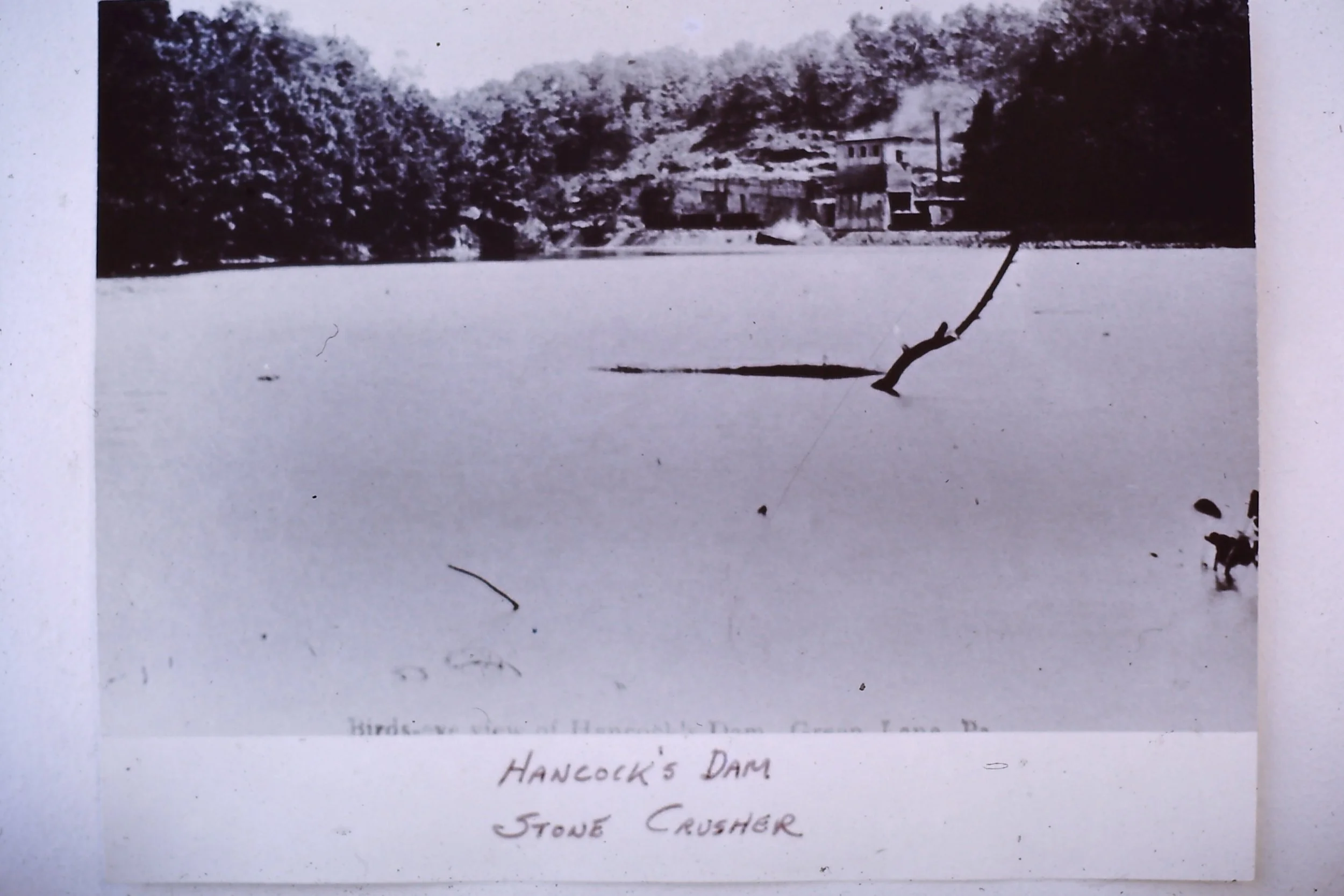
Inventoried 53 dam sites in the watershed in varying stages of ownership.
1967:
PVWA and three member groups testify at public hearings to establish standards and criteria that will improve water quality in watershed streams.
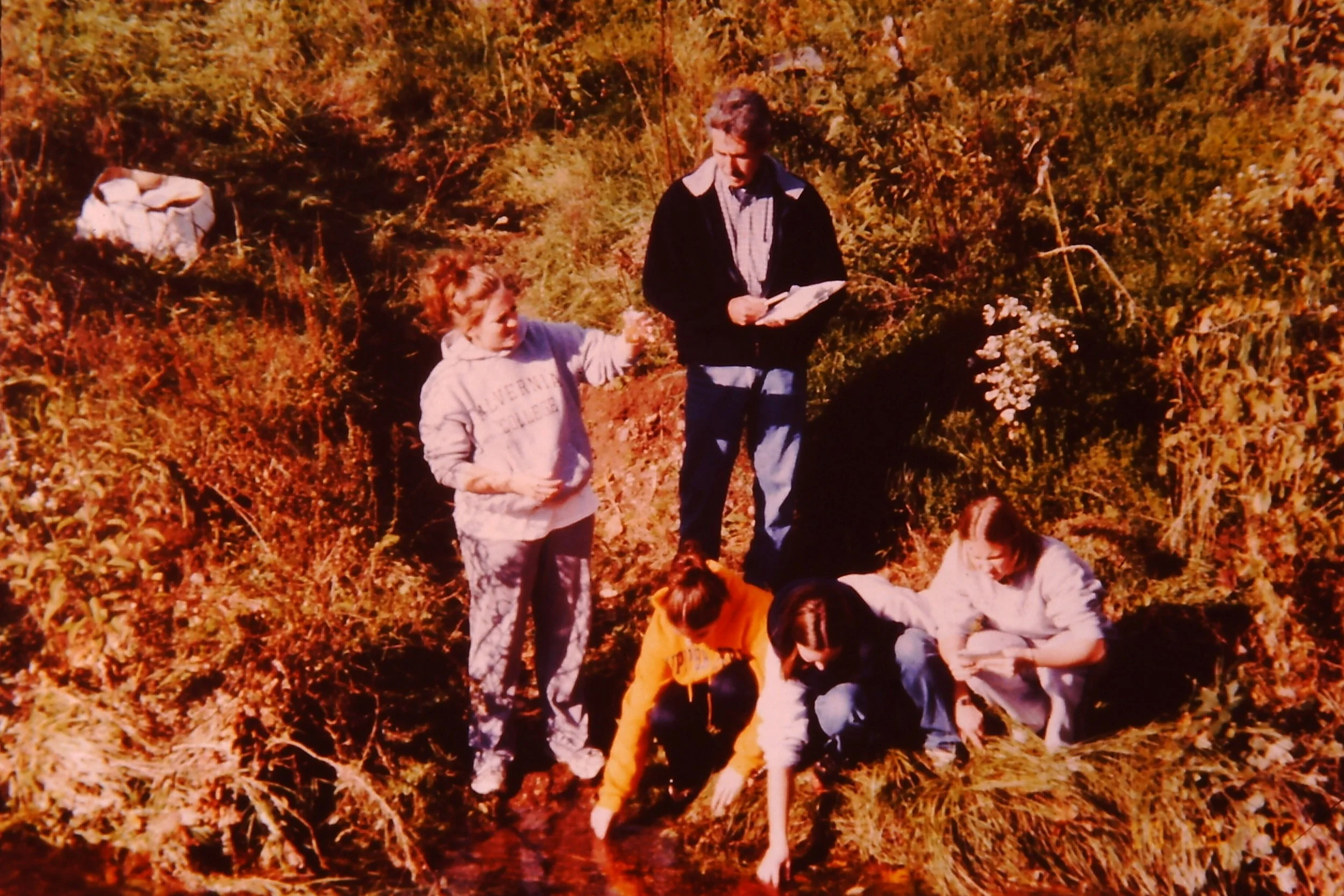
Initiated school and scouts clean-up projects.
Sponsored a Water Pollution Forum at Ursinus College.
1968:
Received approval for the USGS to determine areas of flooding along the Perkiomen Creek from Green Lane to the Schuylkill River.
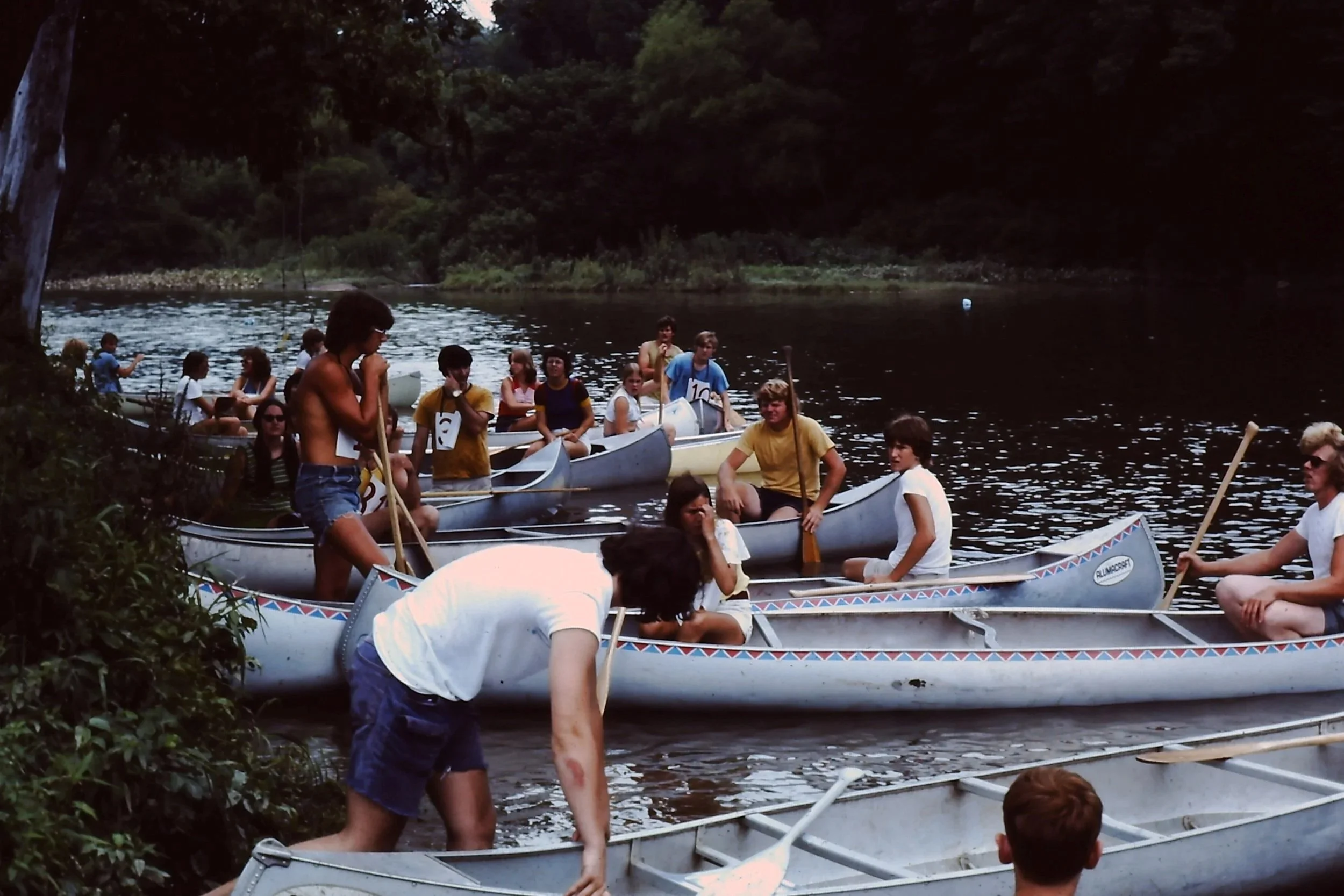
Open Space Committee held canoe floats on the Perkiomen Creek to determine potential for a hiking trail and greenbelt.
Developed a recreational analysis of the watershed.
Sweet Gum trees donated for Arbor Day planting at schools and public buildings.
Continued Cleanup Campaign and Youth Projects.
1969:
Regional Vice-Presidents held meeting in their various areas to determine pollution problems and issues in the sub-watersheds.
Public information meeting on the Nuclear Generating Plant proposed in Limerick.
Open Space Committee developed a short movie, “Perkiomen Greenbelt Hiking and Canoeing Potential”.
Initiated Conservation Merit Award program, awards to be presented at Annual Meetings.
1970:
First year for “Earth Week” speakers and activities.
1971:
Hired an Executive Director to work in liaison with other agencies on matters of environmental concern and to implement volunteer based programs.
Headquarters moved to the Old Power House Auditorium in Collegeville, courtesy of Erv Shainline.
1972 - 1975:
Celebrated the return of clean streams with the first annual Canoe Day and Races.
Three year wild flora study at Sunrise Mill Park.
Petitioned to intervene before the State Environmental Quality Board in regard to a proposed treatment plant on Unami Creek.
Compiled information on waterways as candidates for inclusion in the PA Scenic River Systems.
Initiated PVWAs Rainfall Reporters Network for precipitation forecasting.
Hired an Assistant to the Executive Director.
Headquarters moved to a rental property at 700 Main Street, Schwenksville.
1976:
Hired an Education Director and increased Environmental Education Programs.
Headquarters moved to Cedar Lane in Collegeville courtesy of Evansburg State Park.
1982 - 1985:
Celebrated the start of the “Botany Section” August 1982
Offered informational programs on local issues of concern on acid rain, TCE contamination, Gypsy Moth controls, disposal of hazardous wastes, needs for recycling, deteriorating in-channel dams in watershed streams and more.
Held meetings on water quality management alternatives for each of the sub watersheds.
Continued to take calls on "Pollution Hotline", conduct stream testing, and advocate open space preservation.
Initiated "Help Us to Help the Bluebirds Project" and annual bird seed sale day.
Expanded annual awards program to recognize government and industry for outstanding conservation or pollution control measures.
Headquarters moved to Level Road, Collegeville courtesy of the Lower Providence Township
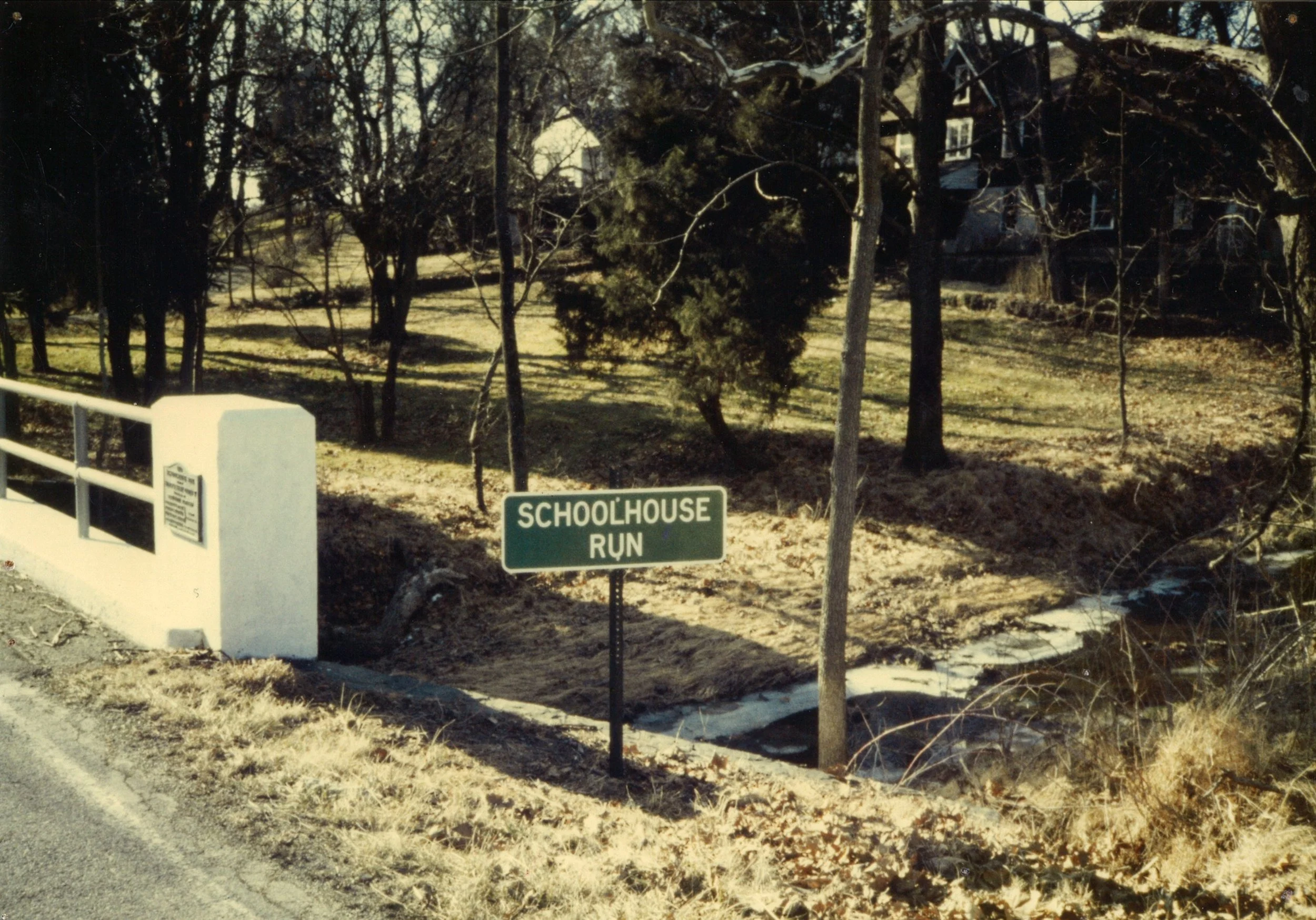
Initiated Creek Awareness Sign Project (CASP)
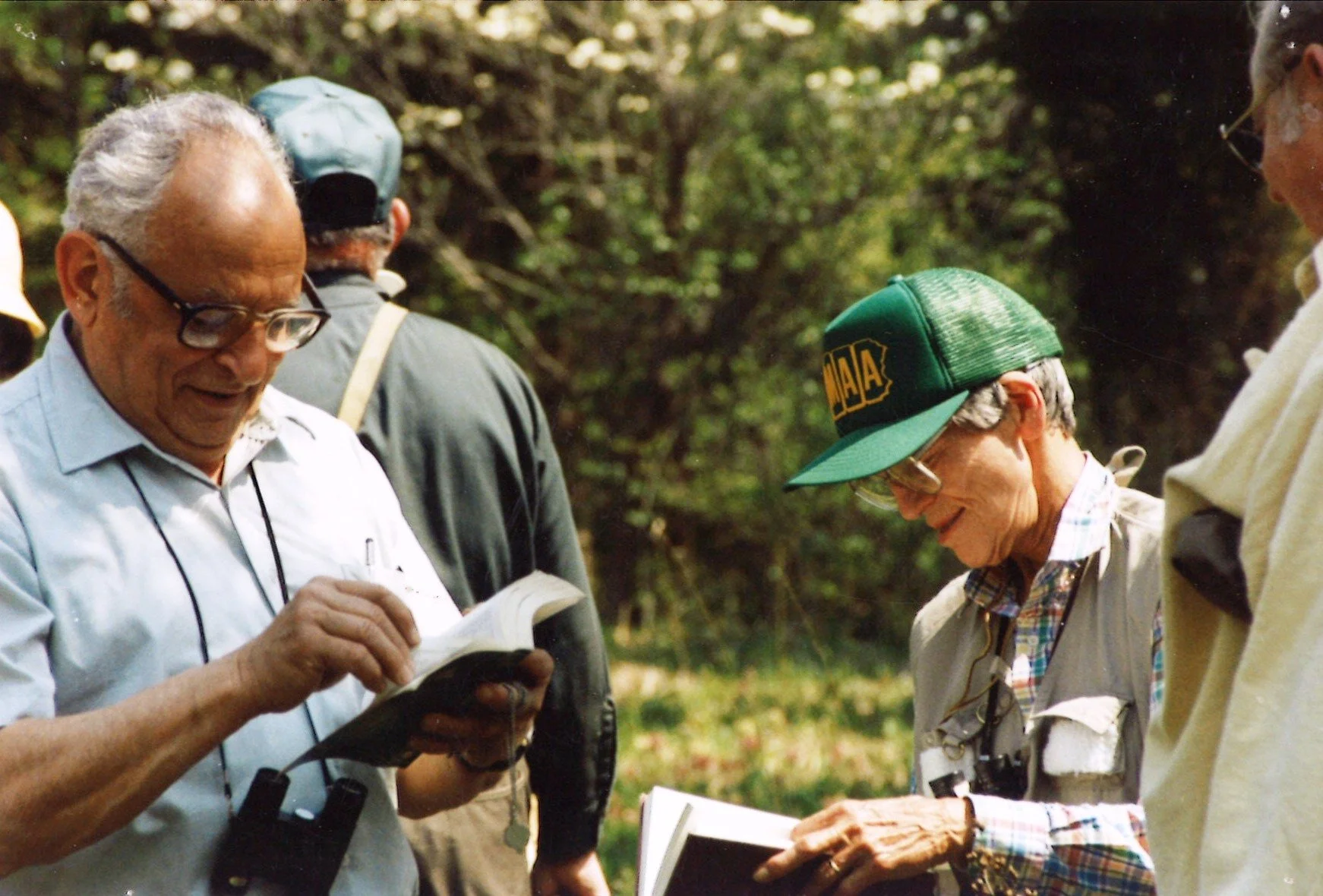
Start of “know your watershed” hikes, canoe trips and streamside walks.
Board of Directors set a priority goal to purchase a permanent headquarters property in the central area of the watershed. Established a building fund for the “acquisition and maintenance of land and a building or buildings to further the objective of the PVWA”
1986:
Headquarters moved to a rental property at the 4H Center in Creamery.
Board of Directors negotiated purchase of brownstone barn on 1.7 acres and began renovations - added stairs and a deck to the front, established landscaping, driveway and parking.
1987:
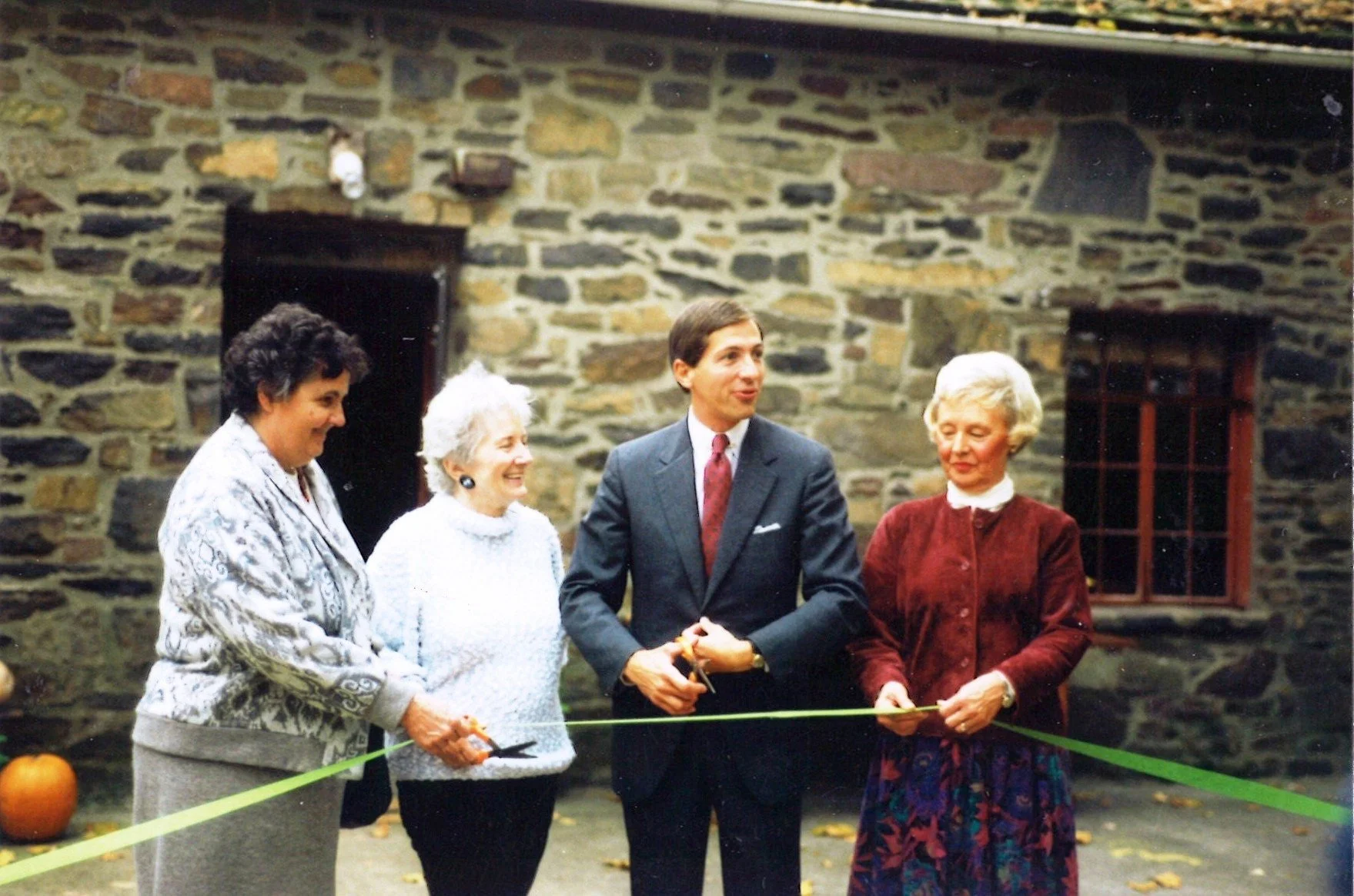
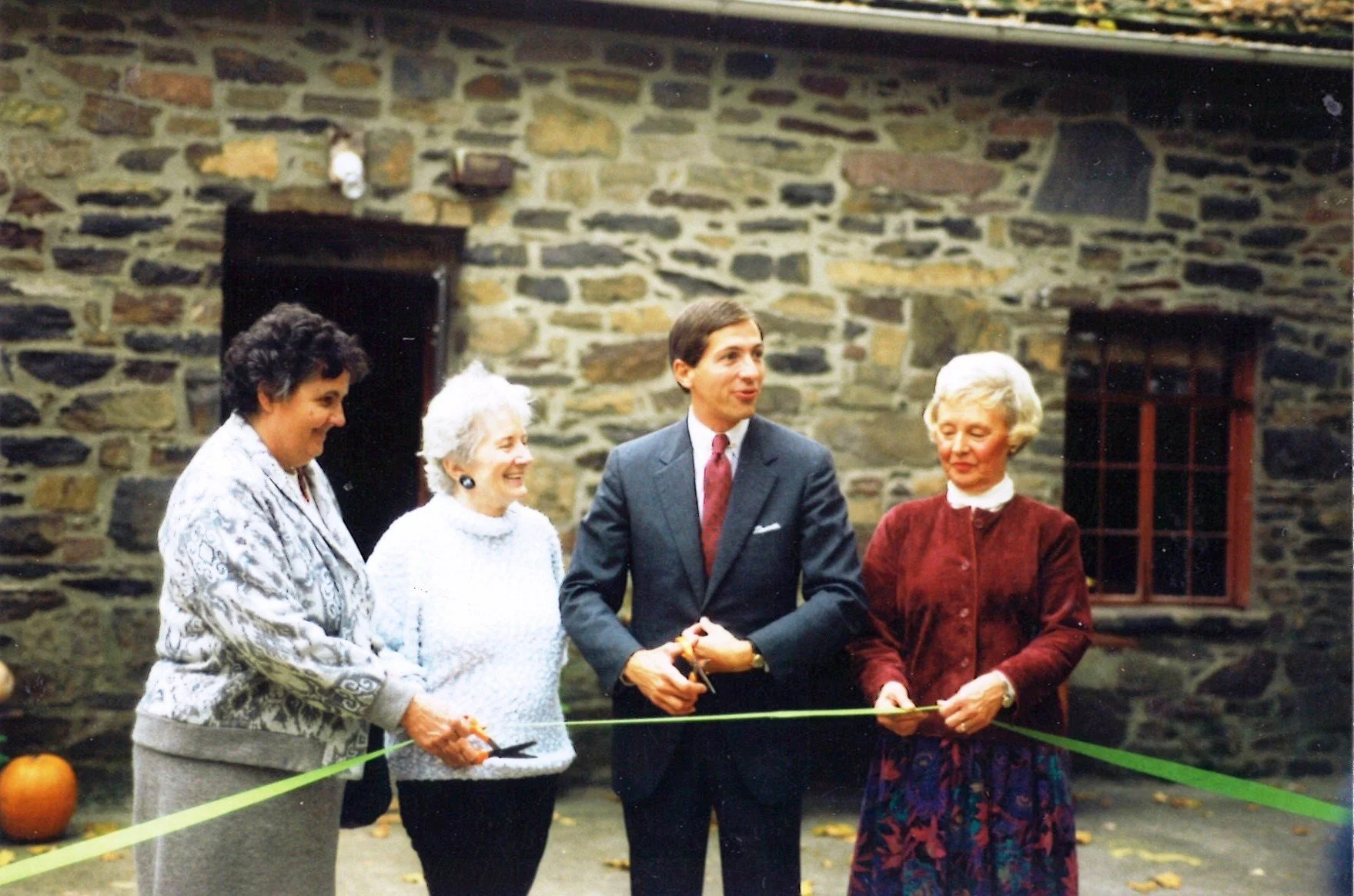
October 20th - Official Opening and Dedication of the new headquarters at Rt. 73 and Haldeman Road, Schwenksville.
1988 - 1989:
Established Cross Currents Newsletter.
Held public information meetings, field trips and provided data to lead agencies to ensure concerns were incorporated into permit conditions and measures implemented to protect environmental values.
1990:
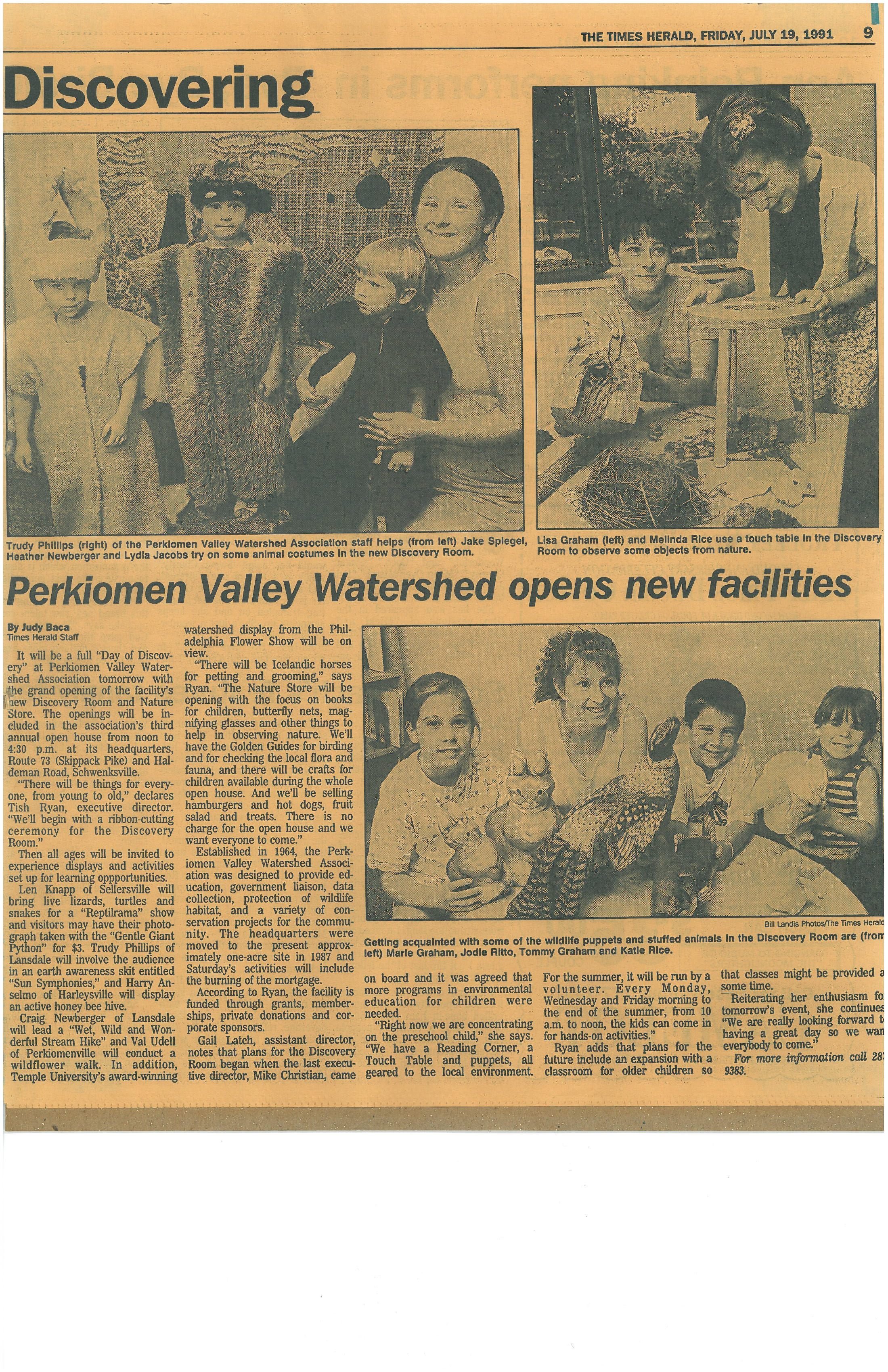
Established and Education Department and cadre of volunteers.
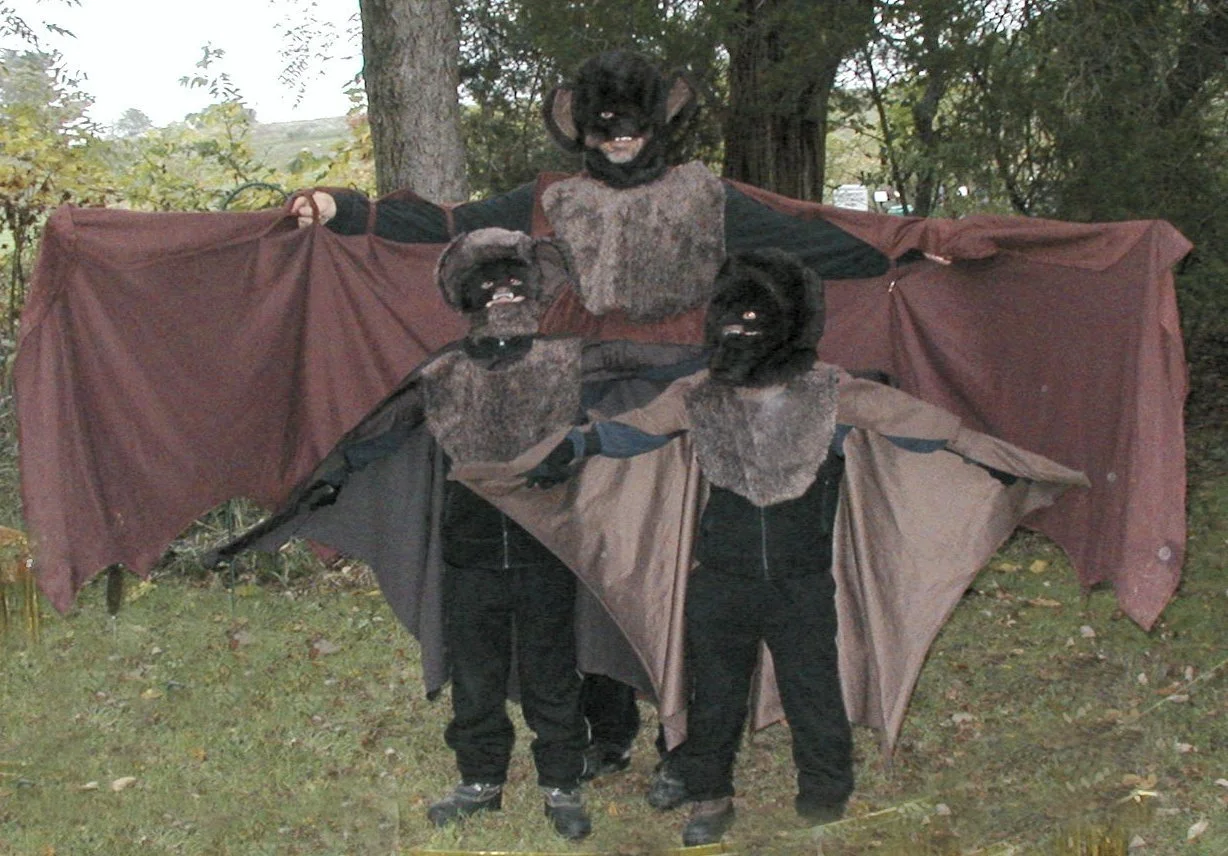
Held first Halloween Night Hike.
Received a special recognition award from the PA DEP for converting the lower level of the Brownstone Barn into a children’s environmental education area.
Built an upper level dormer for office space for staff.
1993:
Held first Lenape Survival Challenge.
1992- 1997:
Initiated Community Environmental Watch (CEW) to advocate for responsible development in the watershed.
Received a special citation from the PA House of Representatives for thirty years of service to the community.
Presented testimony on behalf of upgrading Unami Creek to exceptional value status.
Spoke at hearing on Senate Bill 1157 in support of adding changes to the Municipalities Planning Code which would recognize the importance of environmental features not previously delineated in the Code.
Published the report. "Municipal Watershed Protection: A Case for Local Responsibility and Action" to encourage environmental planning and protection by municipalities in the watershed.
Created an Advisory Board to advise on organizational and environmental issues.
Submitted testimony to DEP on the ramifications of allowing a proposed infectious and chemotherapeutic wastes autoclave to be operated in New Hanover Township and advocated denial of a permit.
1999:
Board of Directors elected to legally change the name of the organization to Perkiomen Watershed Conservancy (PWC) which they felt would better represent the mission.